Overview
My engineering classmate and I founded Varden at the start of 2015, in second year of Mechatronics at the University of Waterloo. What started as a summer project became a company building driverless shuttles for privately owned campuses like universities.
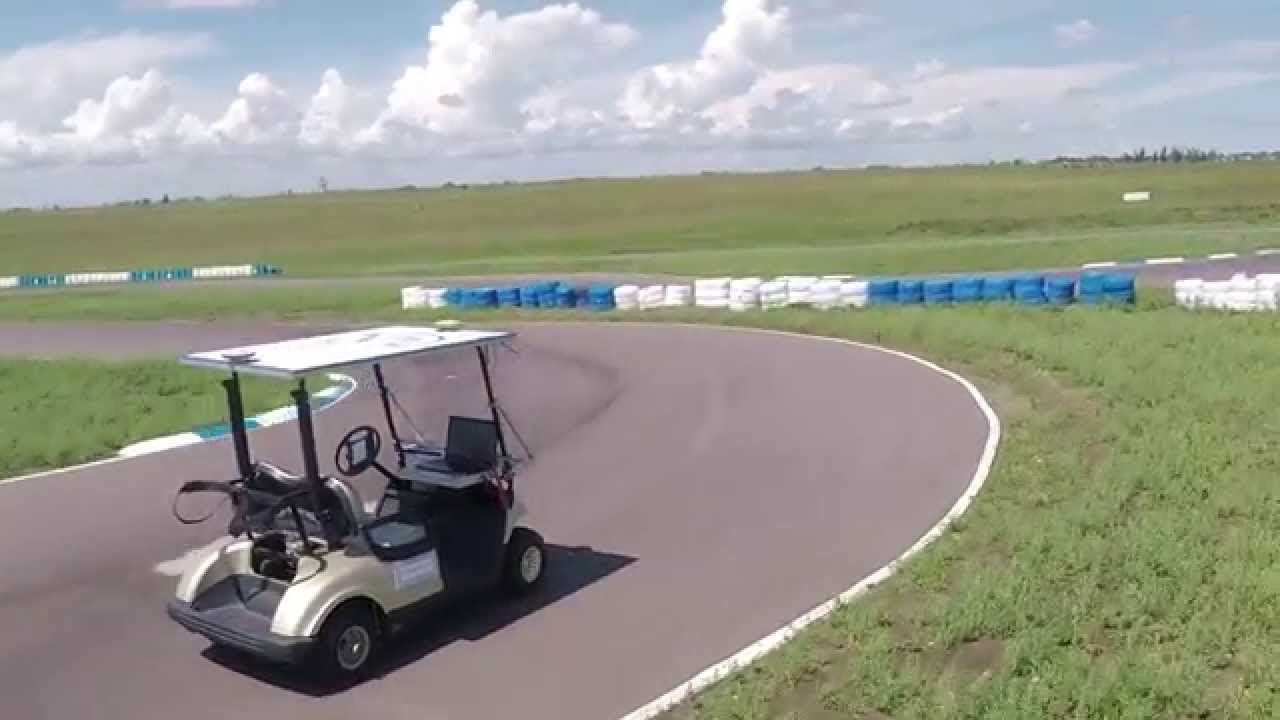
We went full time in May 2015. Within a month we had converted a used golf cart to follow a pre-recorded route with nobody on board, slowing or stopping for obstacles in its path.
Gen 1 — “Marvin”
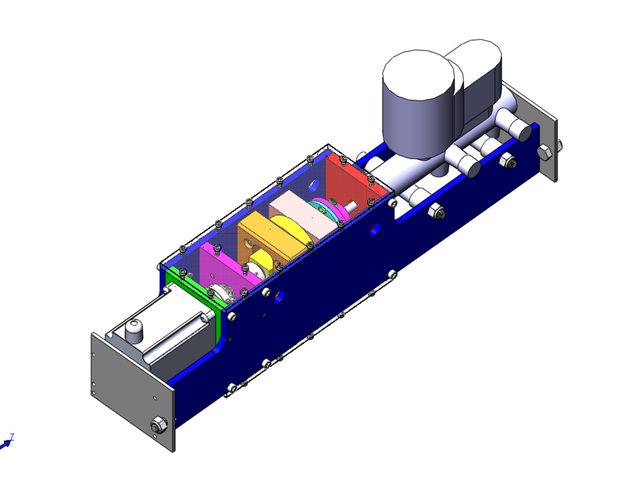
Built by my co-founder and me in two months. We added custom steering and brake actuators, tapped into the existing throttle, and used an embedded controller to interface with actuators and sensors.
High-level software ran in ROS on a laptop. We recorded GPS waypoint paths by driving a route once, then followed them with a pure-pursuit steering controller. A lidar occupancy grid, overlaid on the planned trajectory, slowed the vehicle when objects were near the path and stopped it when they were on it. That simple approach handled nearly all non-adversarial situations at our speeds of up to 16 km/h.
Gen 1 system architecture
- SensorsNovAtel GPS±2 cm (1σ, open sky)Velodyne VLP-16 lidar360° point cloud
- High-levelROS laptopPure-pursuit path following · local occupancy grid for obstacles
- Low-levelEmbedded controllerActuator interface & sensing
- ActuatorsSteering servocustomBrake actuatorcustomThrottletapped into existing
Gen 2 — Polaris Gem
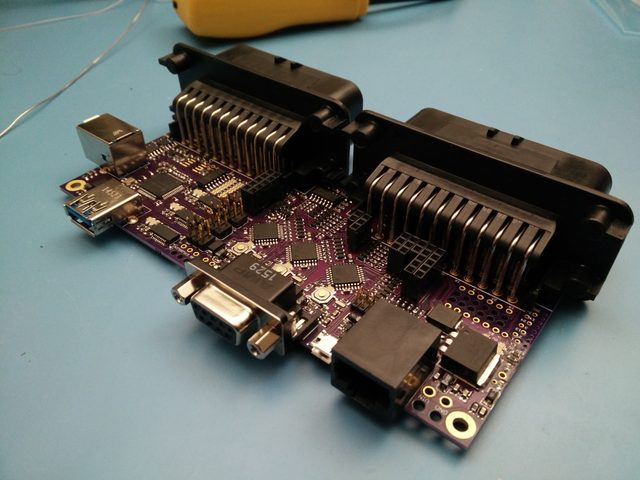
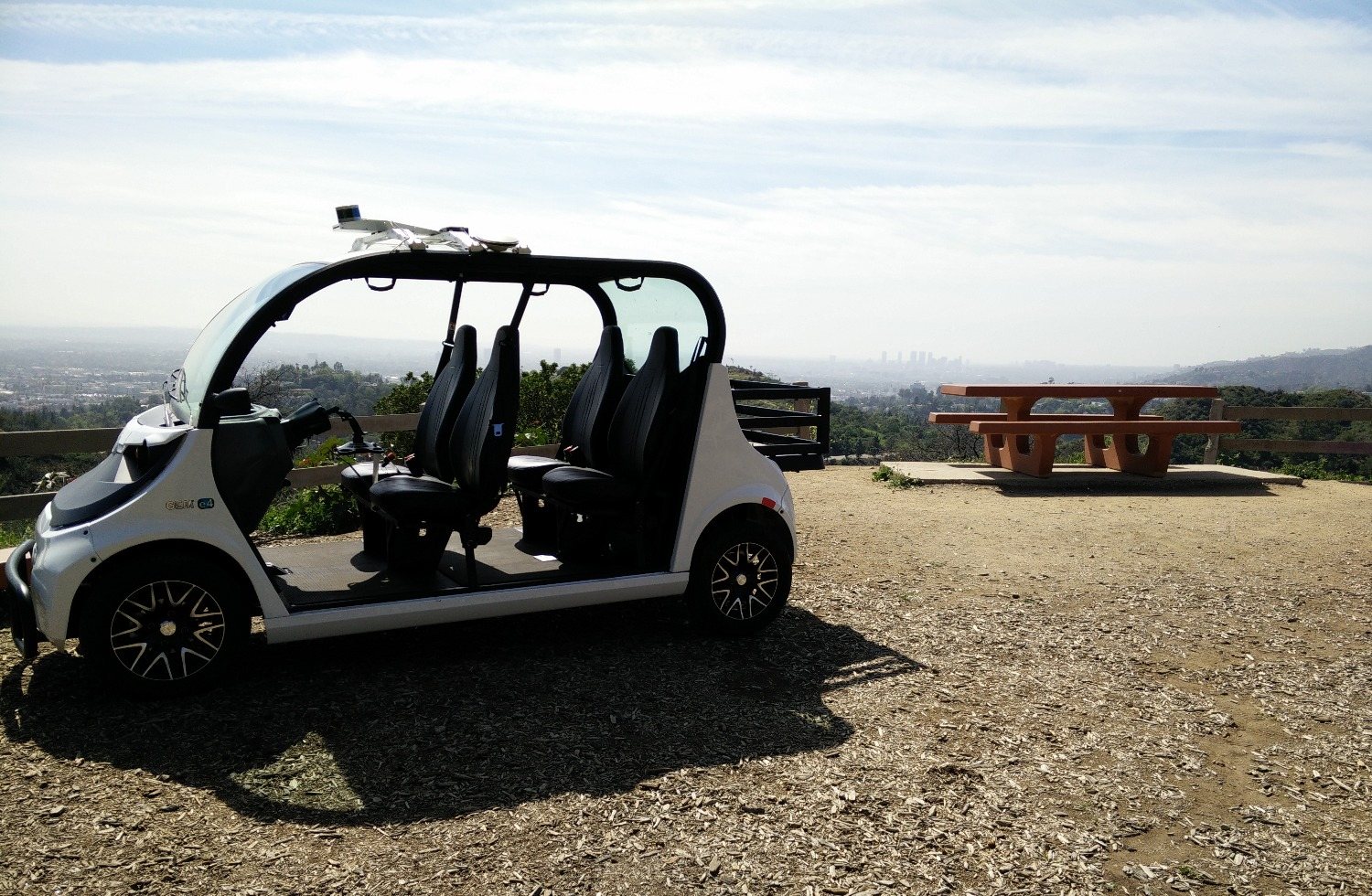
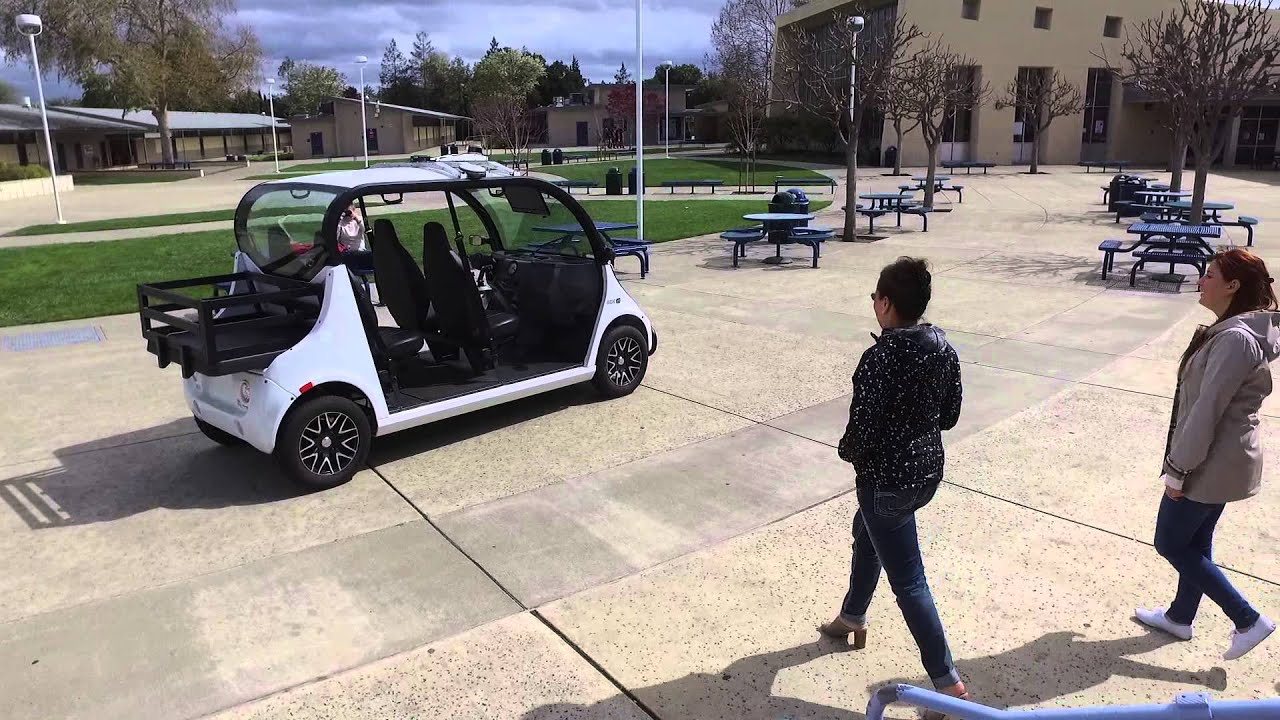
At the start of Y Combinator we moved to a Polaris Gem electric shuttle, capable of 35 km/h, close to our target product speed. I designed its drive-by-wire actuators and its embedded safety system. We started with a ruggedized ROS computer handling everything, then moved vehicle interfacing to a custom board with multiple microprocessors and safety verification.
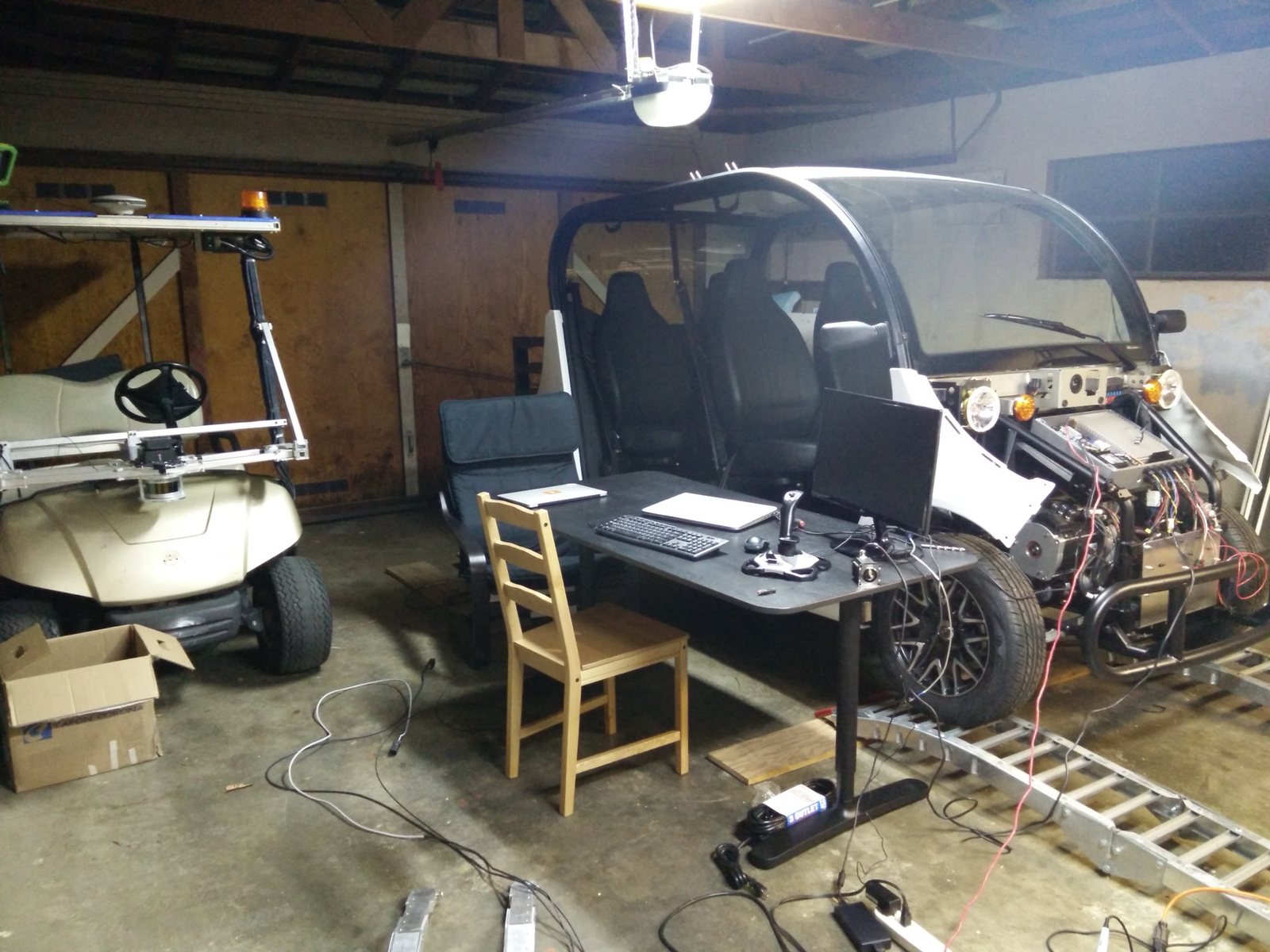
We toured private campuses around California to demonstrate the shuttle in different settings.
Localization
Like Gen 1, the Gem carried a single Velodyne VLP-16 with a full view around the vehicle. But a survey-grade GPS in every vehicle didn’t work economically or in poor conditions, so we began localizing with lidar and high-resolution 3D maps. The plan was to map each campus once with a removable GPS rig, using ICP scan registration and a particle filter, then localize online against that map with a cheaper GPS.
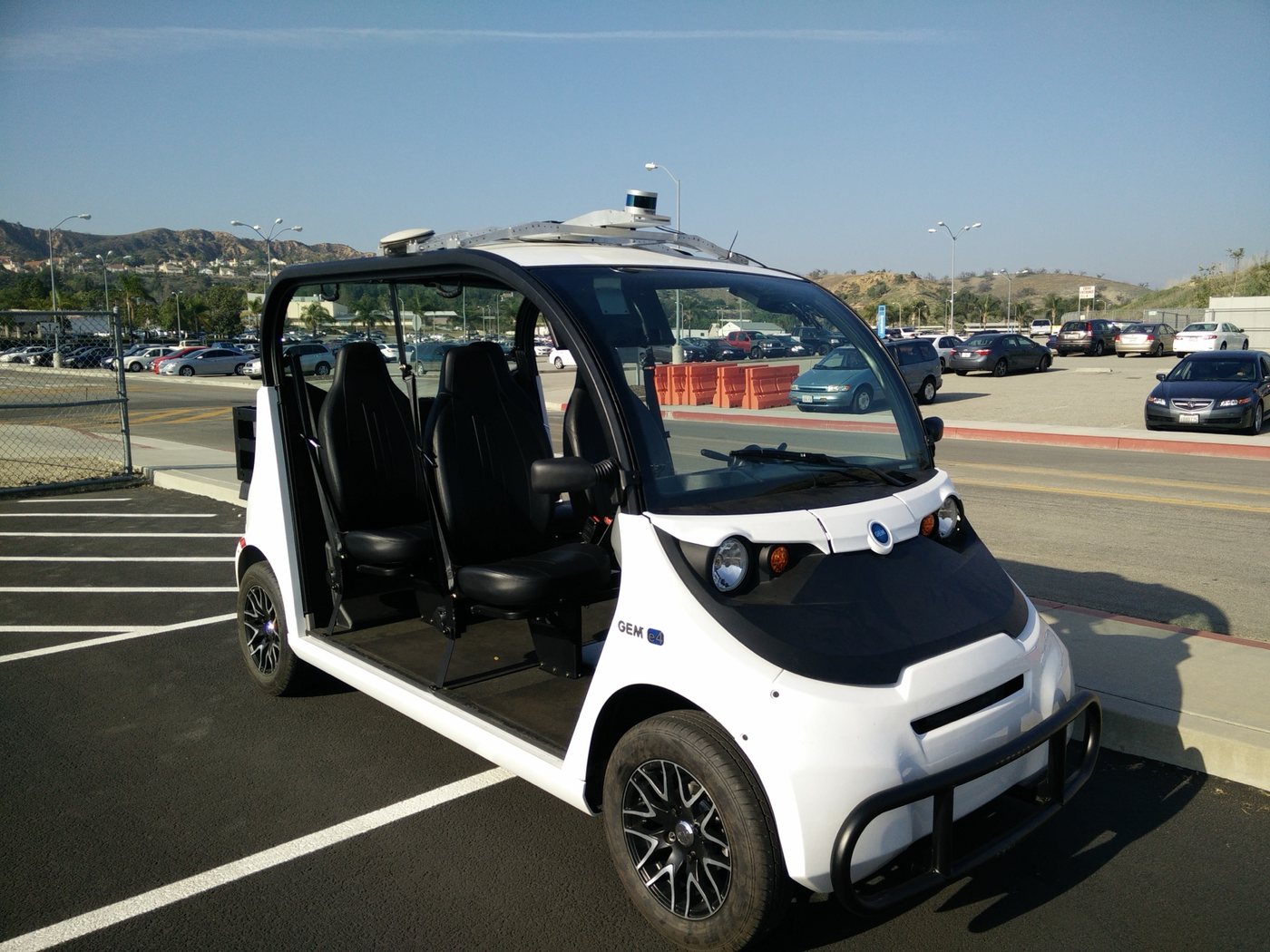
By the time we pivoted, our maps were good enough to localize on; online localization had been tested in simulation.
Outcome
We raised a $2M seed round at Y Combinator’s Demo Day. Around the same time we saw how under-served self-driving trucking was, and in April 2016 we pivoted the company and renamed it Embark.