Fault-tolerant power
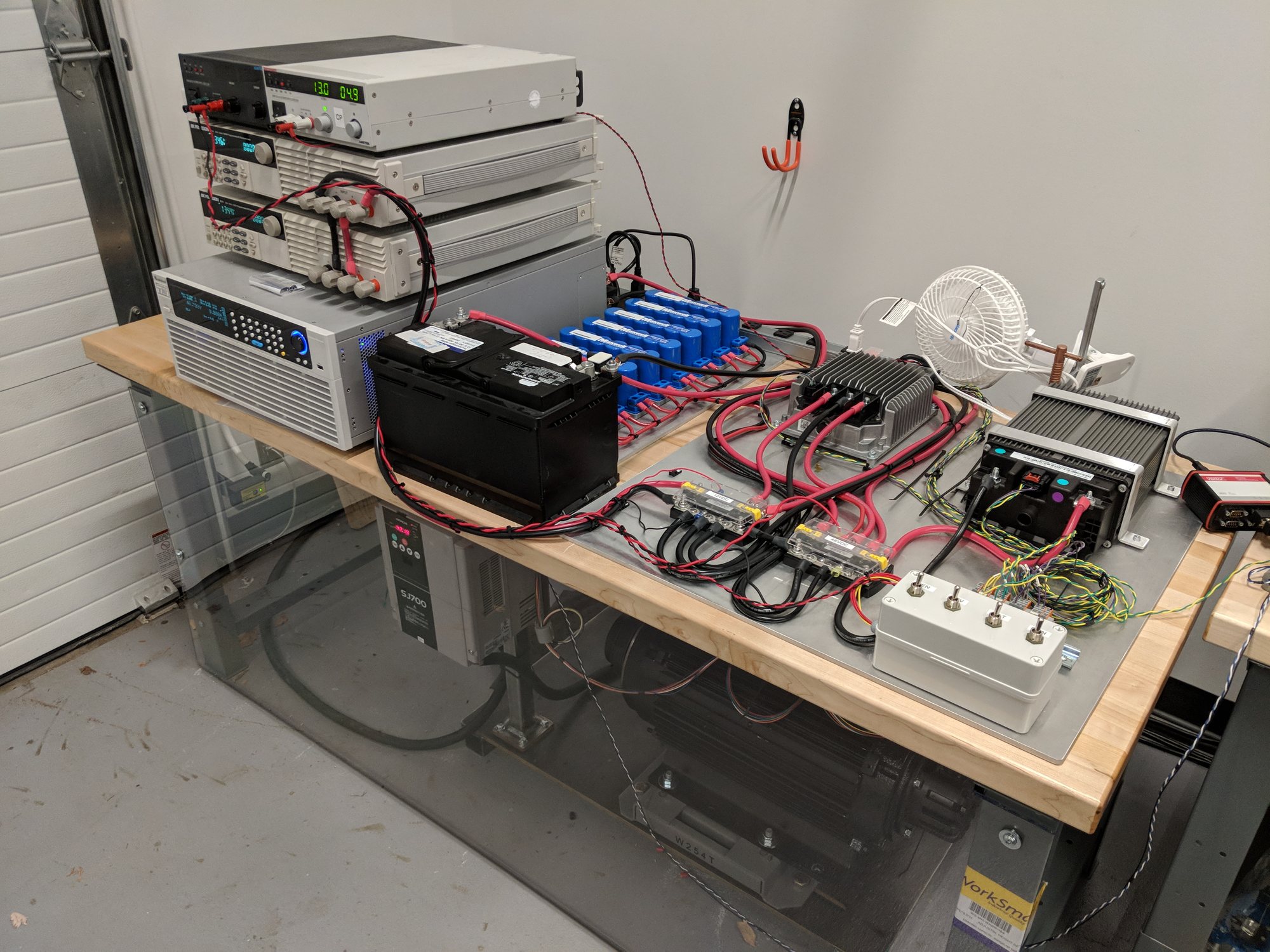
My first project was the power system: architecting, integrating and benchmarking configurations that supply the self-driving platform redundantly. The photo above is the bench rig I built to test them:
- A 12 V battery (the black box) backed by a bank of capacitors (in blue).
- A 12-to-48 V converter, kept cool by a desk fan, feeding a 48 V battery on the far right.
- The vehicle’s automotive supply.
- Lab power supplies and an electronic load on the far left for sourcing and discharging.
- A large motor under the desk, drawing power as a simulated vehicle load.
Lidar rotation sync
I built a system to control lidar rotation so all sensors on all vehicles stay synchronized in their sweep, with simulations to model the system and tune the controller, and Python tools to interface with the sensor, auto-characterize it and validate controller performance.
Lidar rotation sync: control loop
- Fleet sync referenceTarget rotation phase
- Rotation controllerModeled and tuned in simulation
- Lidar spin motor
- Rotation angleSynchronized sensor sweep
↺ angle feedback
Radio & boards
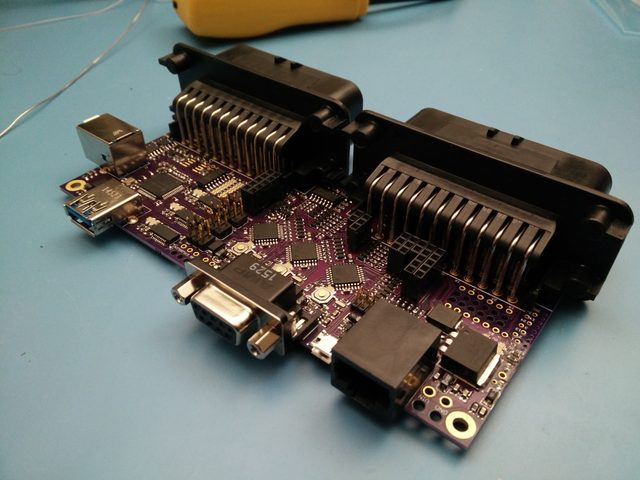
I independently developed and ran FCC testing for the next-generation telecommunication radio module, and designed breakout and interface boards for my own and existing projects to speed up production, testing and development.
Why I went
After Embark I had strong opinions about how to build a large engineering team to solve self-driving. The internships were a way to “close the loop” on that thinking against a company doing it at scale.