2013 — pyramid climber, team 1334
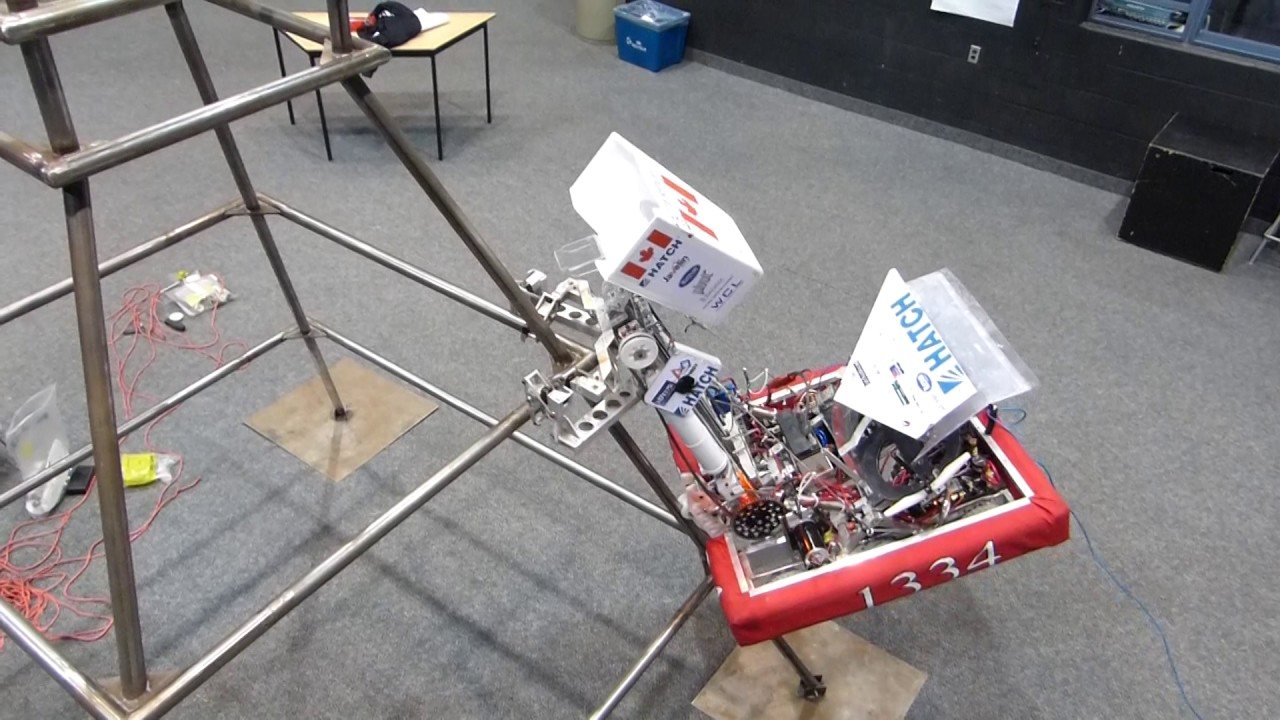
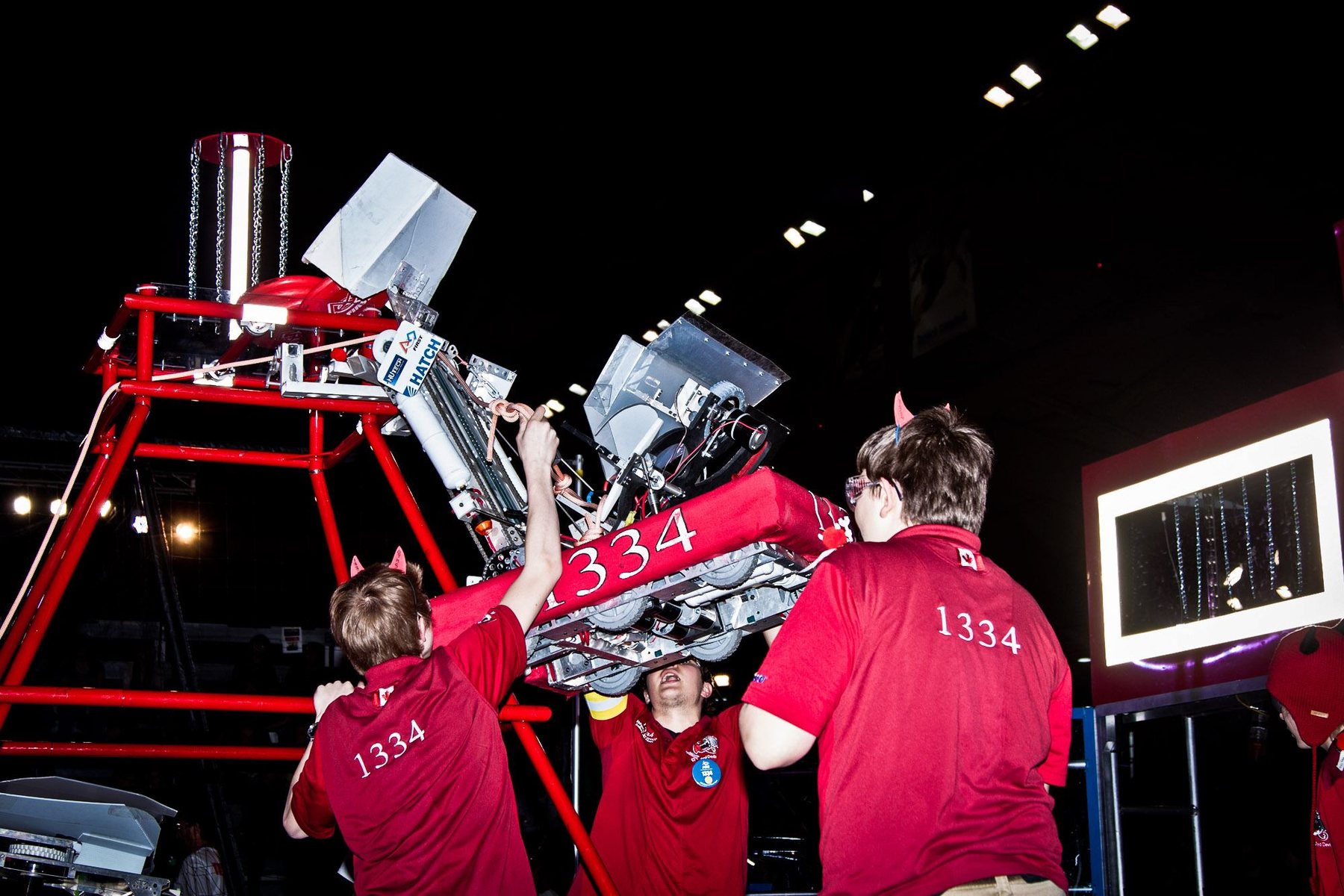
In my final year of high school I was the unofficial student design lead and mentored the students working on the robot. The part I owned was one most teams wouldn’t attempt: climbing a pyramid of square rungs, one rung at a time, to dump frisbees at the top.
Two sets of hooks on opposed chain runs moved in opposite directions from the same motors, so the climber was working on both strokes and telescoped to fit the size limits. The hard part was the protruding “knuckle” at each rung corner; after many prototypes I designed a wheel that rolls up the pole, gets lifted by a slide at each knuckle, and springs back once past it. We were in the top five worldwide for speed and consistency, which led to the team’s first district win and a trip to the world championship.
2014 — mentoring team 1114
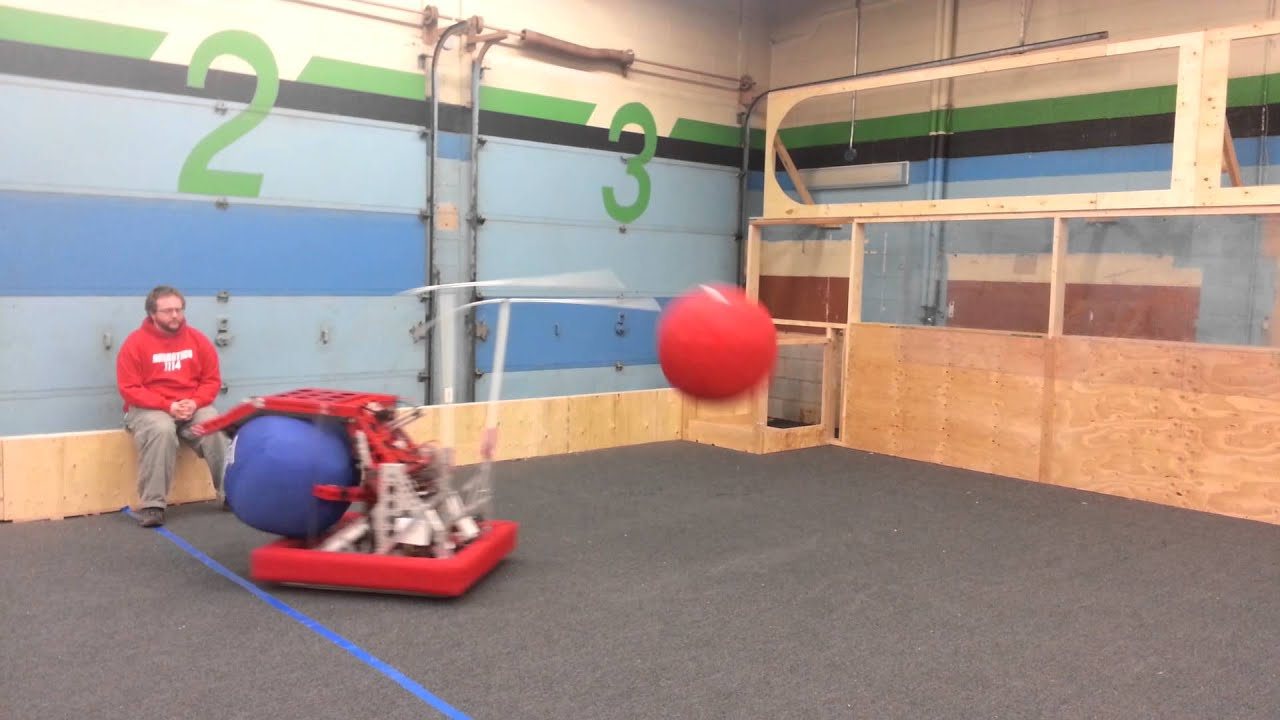
In my first year mentoring 1114, I led students through prototyping mechanisms, then consulted on refining the robot’s systems once built. I also introduced the team to CNC milling for parts, which they went on to use extensively. The robot ranked in the top three of 4,000+ teams in district play and reached the world championship finals.
The game that year was picking up large inflatable balls and shooting them into slots in the back wall of the field. The video shows the robot’s autonomous routine collecting and shooting two pre-placed balls.
2015 — box stacker
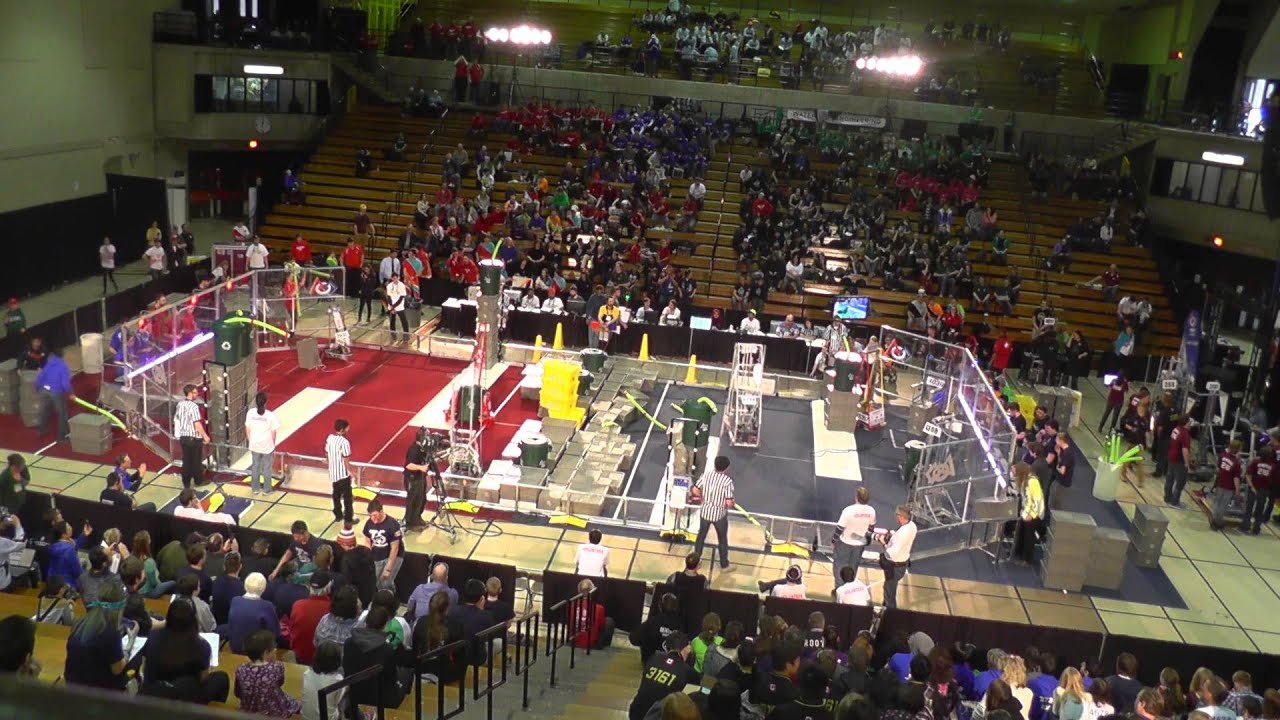
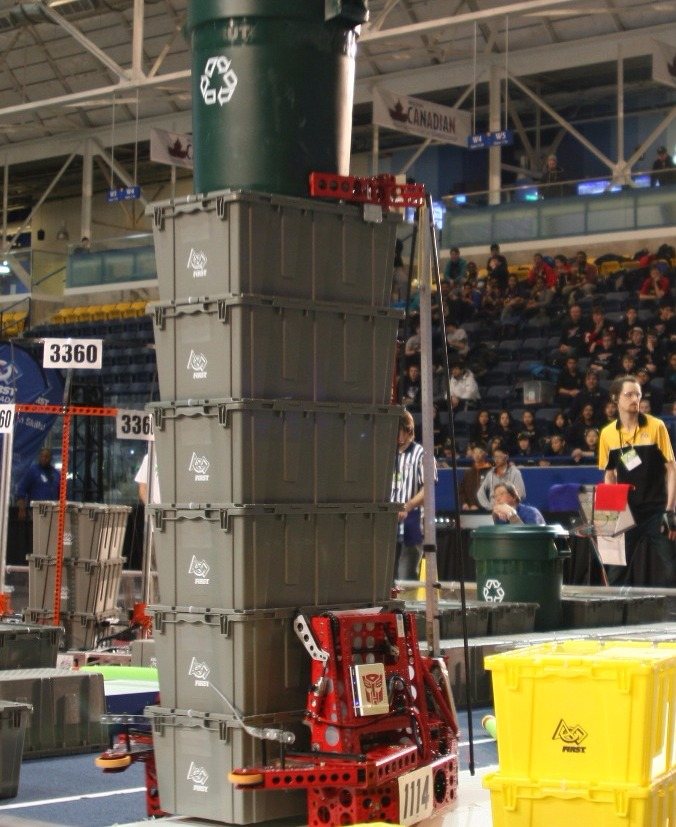
The 2015 game was stacking boxes into towers up to six high, with big bonus points for a green bin on top. I co-designed, with one of the students, the indexing mechanism that lifted and held the growing stack: mostly sheet metal, with four chain runs on one motor carrying hooks around a slot-shaped path, lifting each new box through sprung latches. Mounting the whole mechanism at a 3° angle to the robot made the flanges and bends much harder. 1114 was far and away the top team in district play that year. The video at the top of the page shows the second-highest-scoring match in the world that year.
2015 — the crossbow moonshot
Bonus points came from four contested bins in the middle of the field. Once a bin was pulled to one side it stayed there, so the fastest teams grabbed them with pivoting arms.
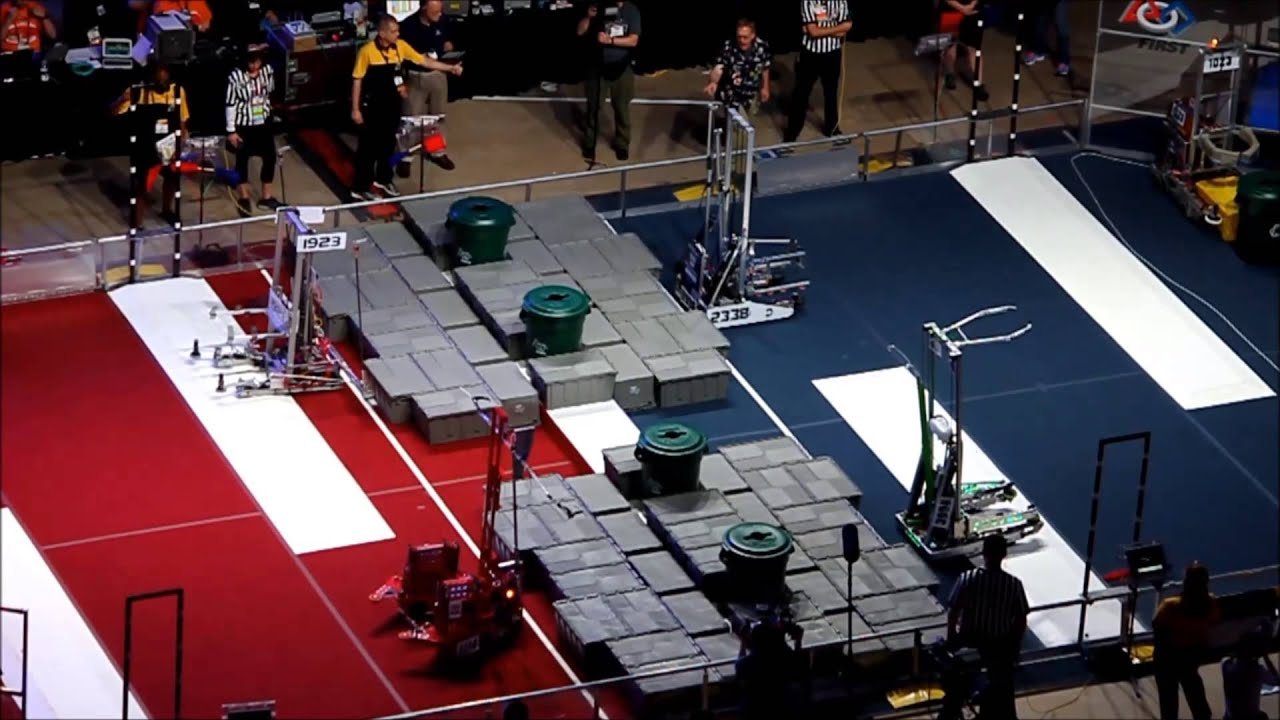
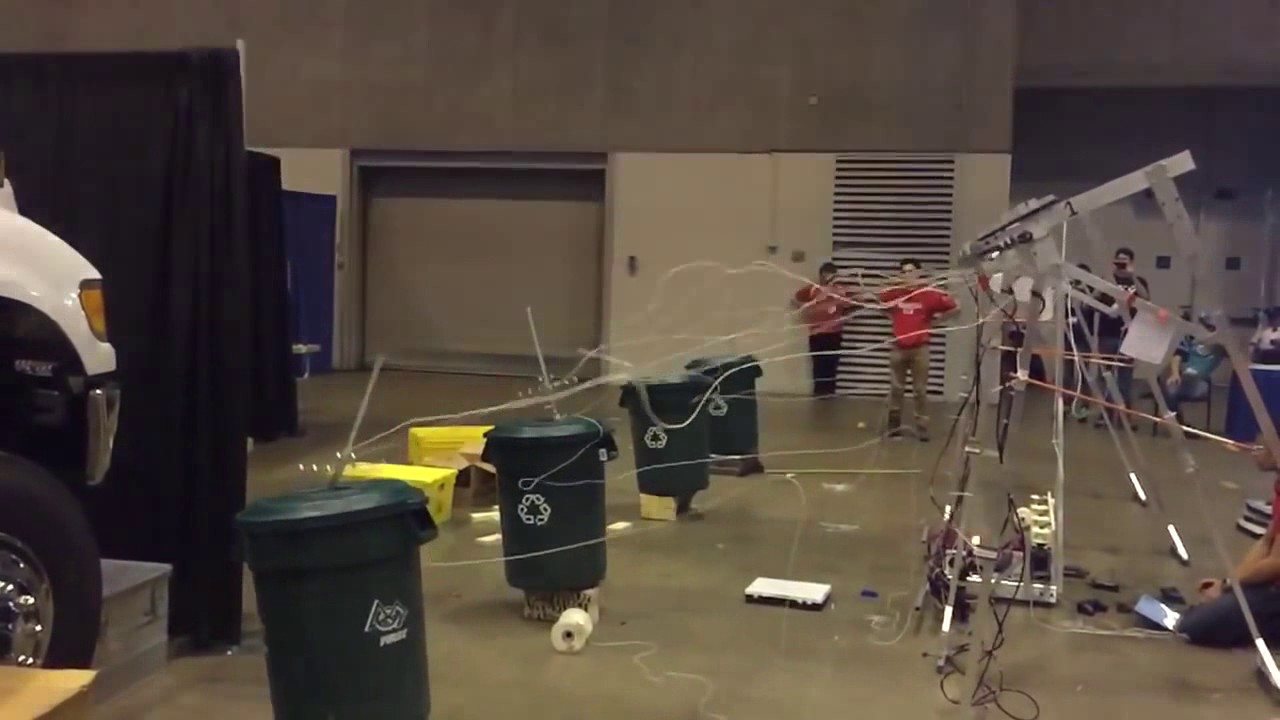
Our moonshot: four tripod-mounted crossbows, carried by our third alliance partner, firing grappling-hook bolts to capture all four bins at once and guarantee a win in the finals. A projectile needs less energy to reach a bin than a swinging arm: the best arms had about 0.25 kg·m² of inertia and followed an arc, while a bolt could weigh under 0.2 kg and fly a shorter distance.
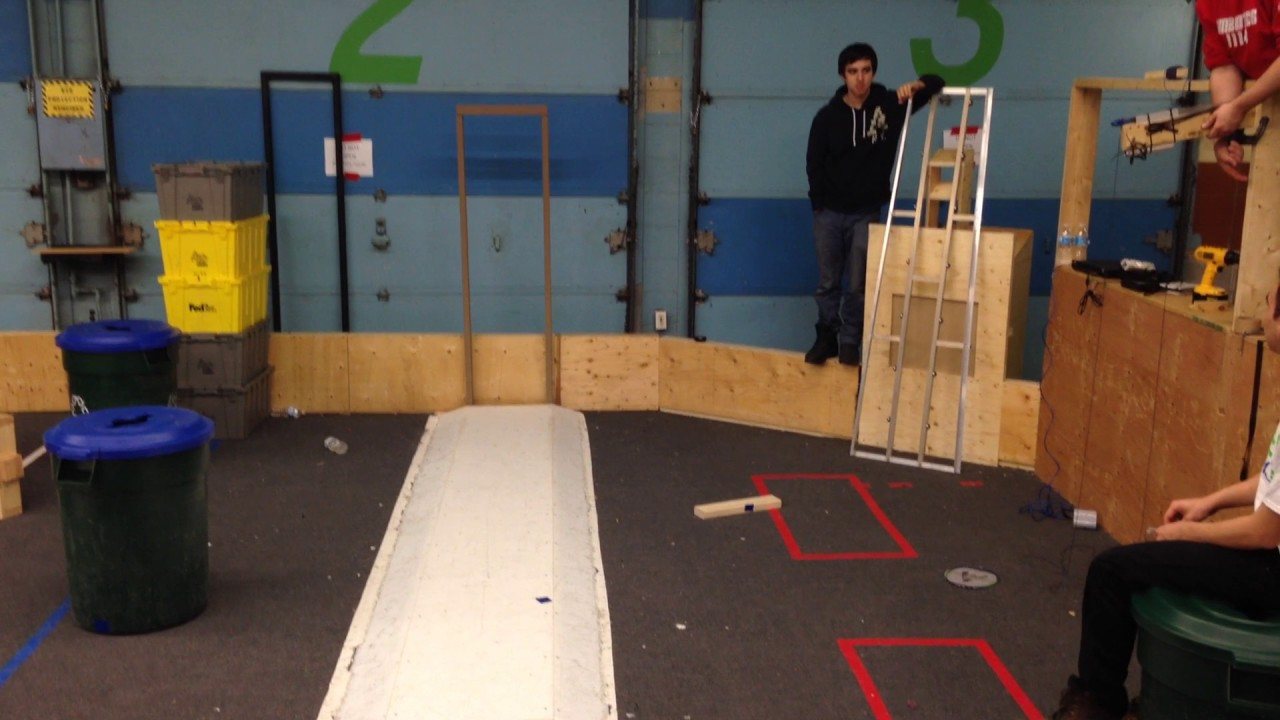
A 20-minute prototype showed a weighted projectile hit the bin consistently. Many more high-speed videos settled the bolt design; some versions twisted mid-flight, some were unstable, and some ricocheted out.
2015 — crossbow design
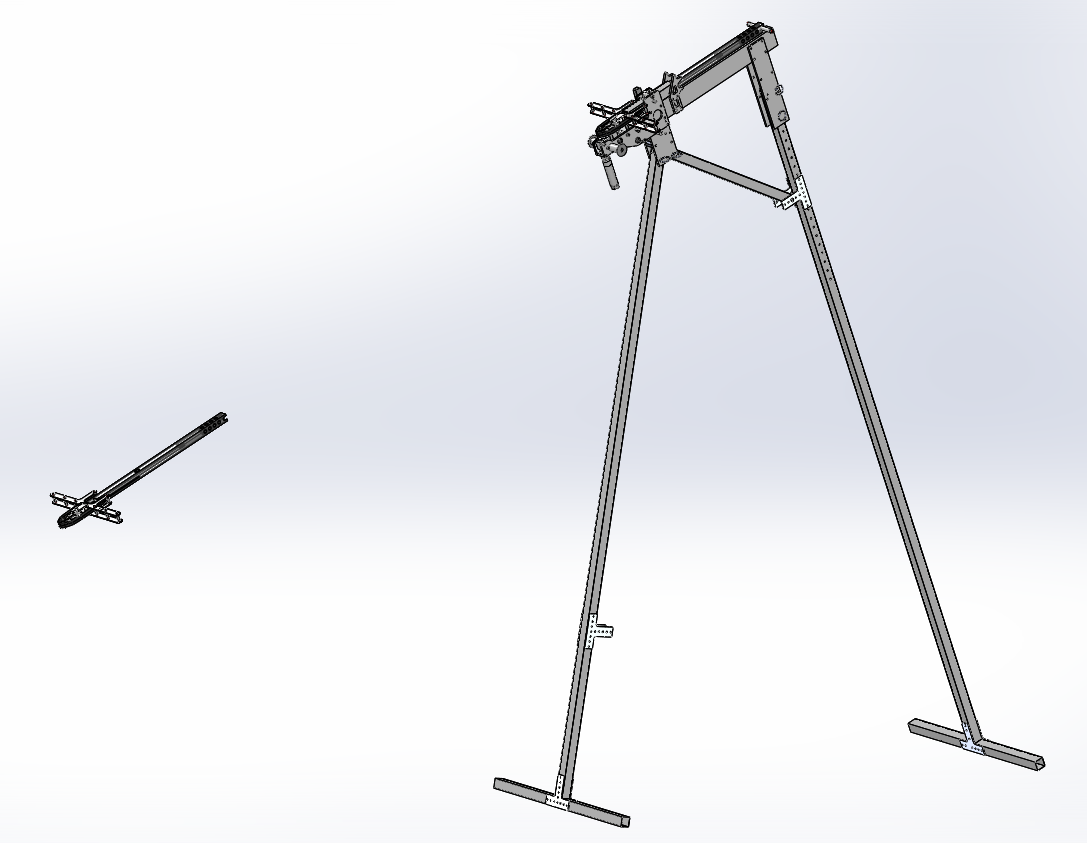
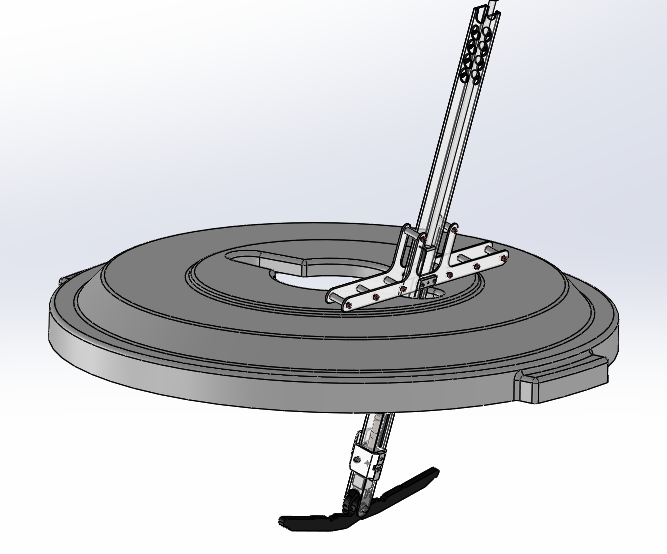
Each crossbow stood on its own tripod, lined up with its bin from marks on the floor. The legs set the height and angle of the shot, which had a generous tolerance; horizontal aim was harder, but a couple of sticks as sight lines worked consistently enough.
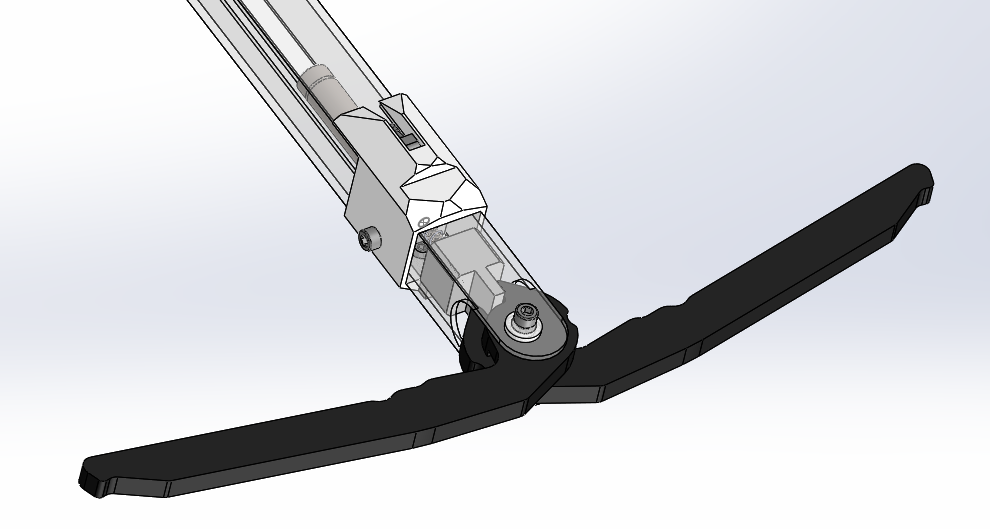
The bolt was about 210 g, almost all plastic for low weight: polycarbonate, Delrin, nylon and printed ABS. As it entered the lid, a polycarbonate wing hit the lid and slid back along the body to a hard stop that kept the bolt from falling in. Sliding back, it let the sprung Delrin barbs (black) open under the lid. A ratchet winch then pulled the bin in and couldn’t be back-driven if contested.
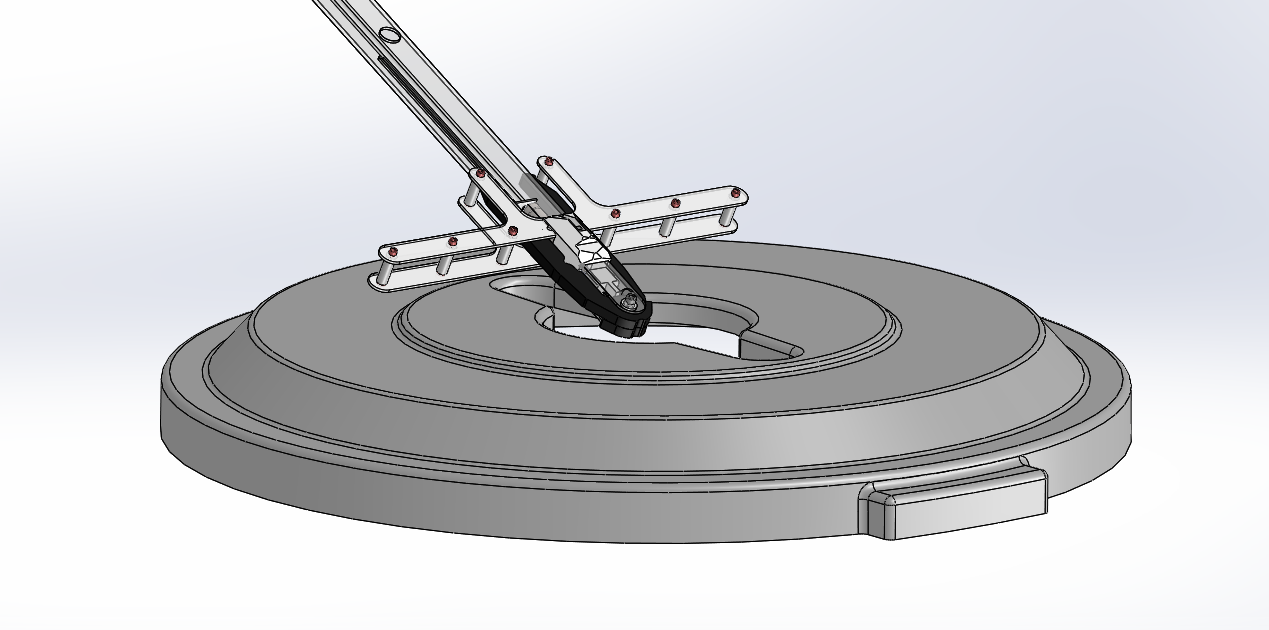
To let go, a micro pneumatic piston inside the bolt slid back an aluminium blade that stopped the barbs, and they flipped a full 180° to come out of the bin.
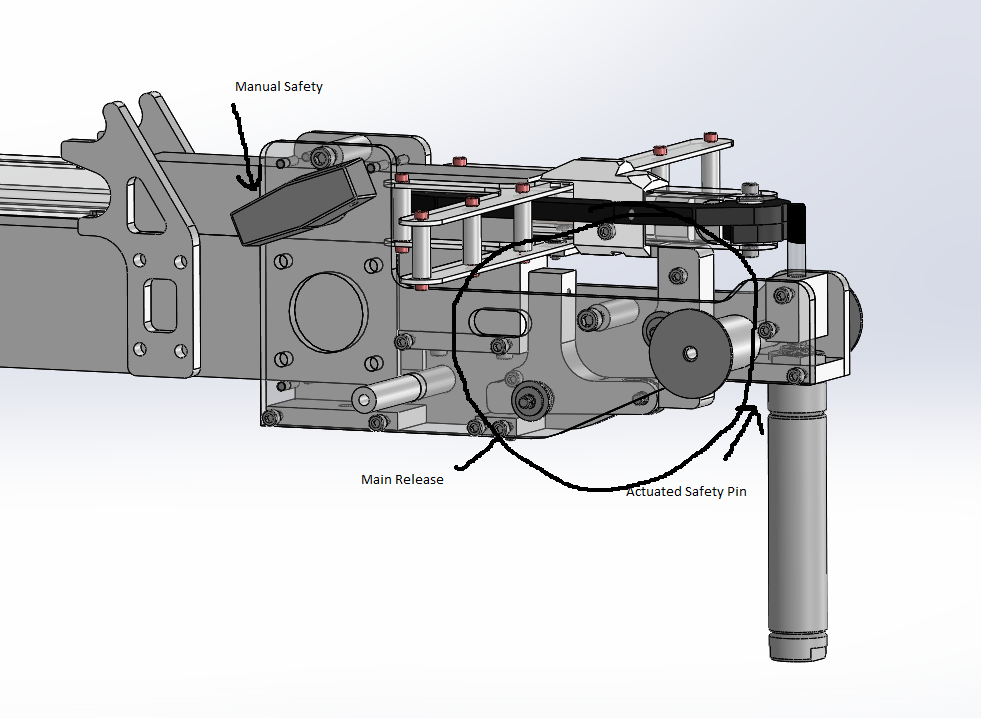
Surgical tubing pulled the bolt with about 440 N at full draw and about 130 N at the end of its 12-inch stroke. I designed a tuneable hairpin trigger, released by the last eighth-inch of an 8 W solenoid’s stroke: a rotating toggle holds the bolt back, and a pivoting arm with a bearing on its end holds the toggle, set 1–3° over centre with a set screw so a very small force releases it.
The CAD labels the main release (the trigger) and the two safeties. For loading, a manual quick-release pin through the frame plates and the bolt isolated the tubing from the bolt. The actuated safety pin, a pneumatic piston at the front, sprang up just after firing so a trigger that failed couldn’t misfire later in the match. The rules also required a doubled safety line from bolt to frame.
2015 crossbow: sequence
- EnergySurgical tubing~440 N drawn, 12″ stroke
- ReleaseHairpin triggerSolenoid-released, 1–3° over centre
- CaptureGrappling boltBarbs spring open inside the can
- RetrieveRatchet winchPulls the can in; micro piston releases it
2015 — world championship
We went into the championship behind schedule, but the crossbows would only be used in the playoffs, which gave us about 20 more hours to finish them. We ran out of time: the crossbows were ready, but we needed another hour or two of integration testing and didn’t feel confident using them. Our alliance lost in the world championship semi-finals, finishing third in the world.
The video is one of our integration tests, about 30 minutes before we might have gone on the field, with the winches off.