Why trucks
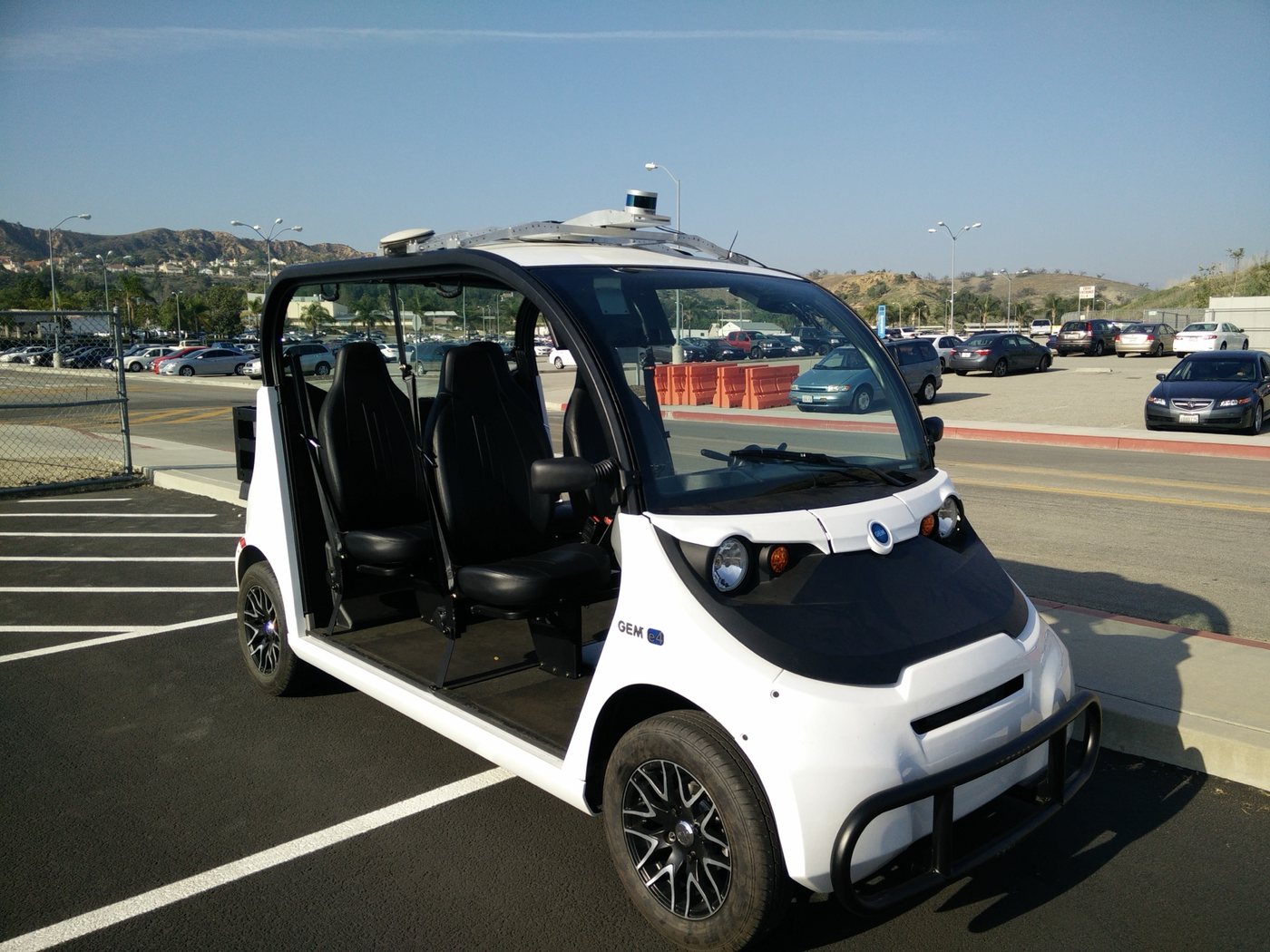
While building Varden it became clear that self-driving would transform two industries first. Everyone was chasing taxis; commercial trucking had the same driver-cost economics and a similarly massive market, but very few teams. In May 2016 we pivoted.
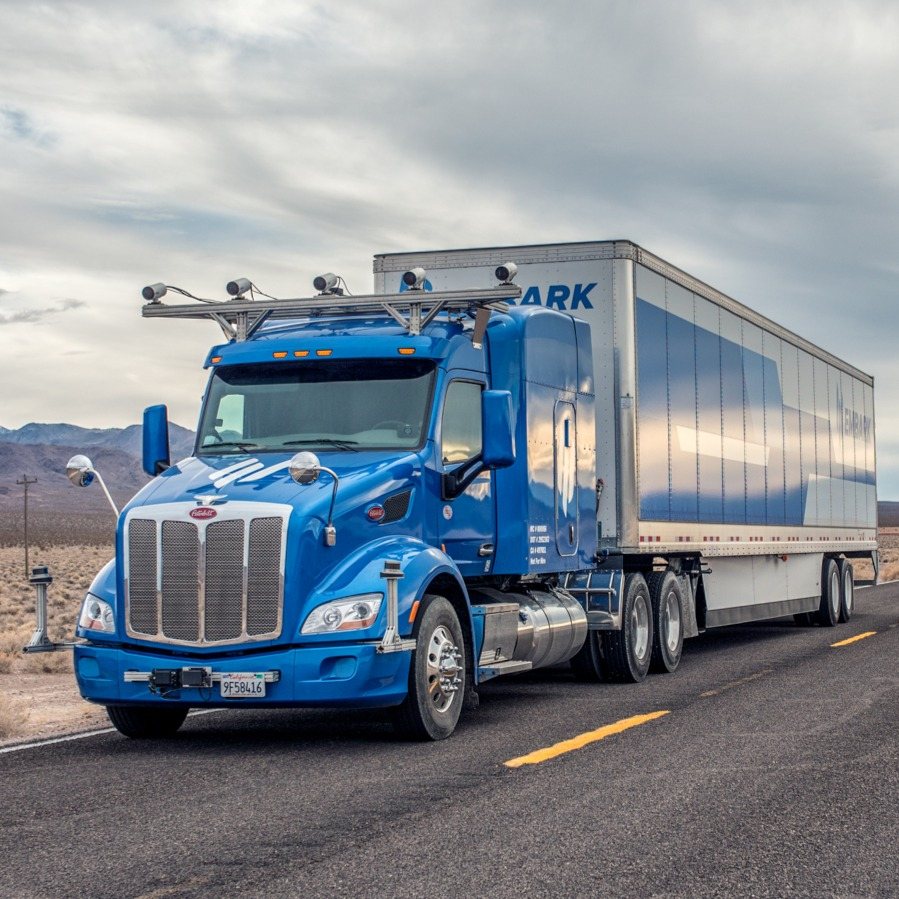
With the money raised before the pivot, we hired key people from the self-driving and aerospace industries and started on the first-generation prototype in the video below.
What I built
I owned the hardware systems, all software for vehicle interfacing and controls, the mechanical systems such as actuators and sensor mounts, and the safety of the whole system. Most of the detail is confidential; this is what has been made public.
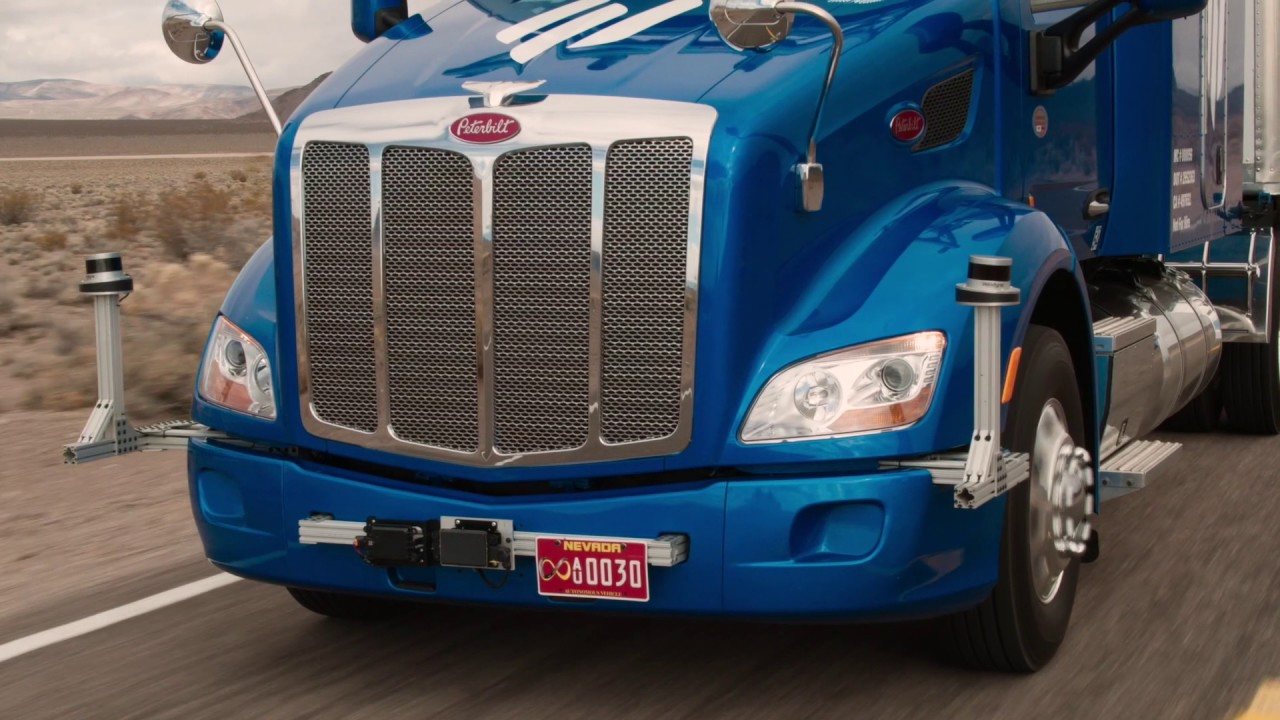
- Got control of throttle, brake and steering on an 80,000 lb truck: worked with large automotive suppliers, then reverse-engineered the truck’s CAN networks with one of our engineers until we had full control, in a way safe enough for public-road testing.
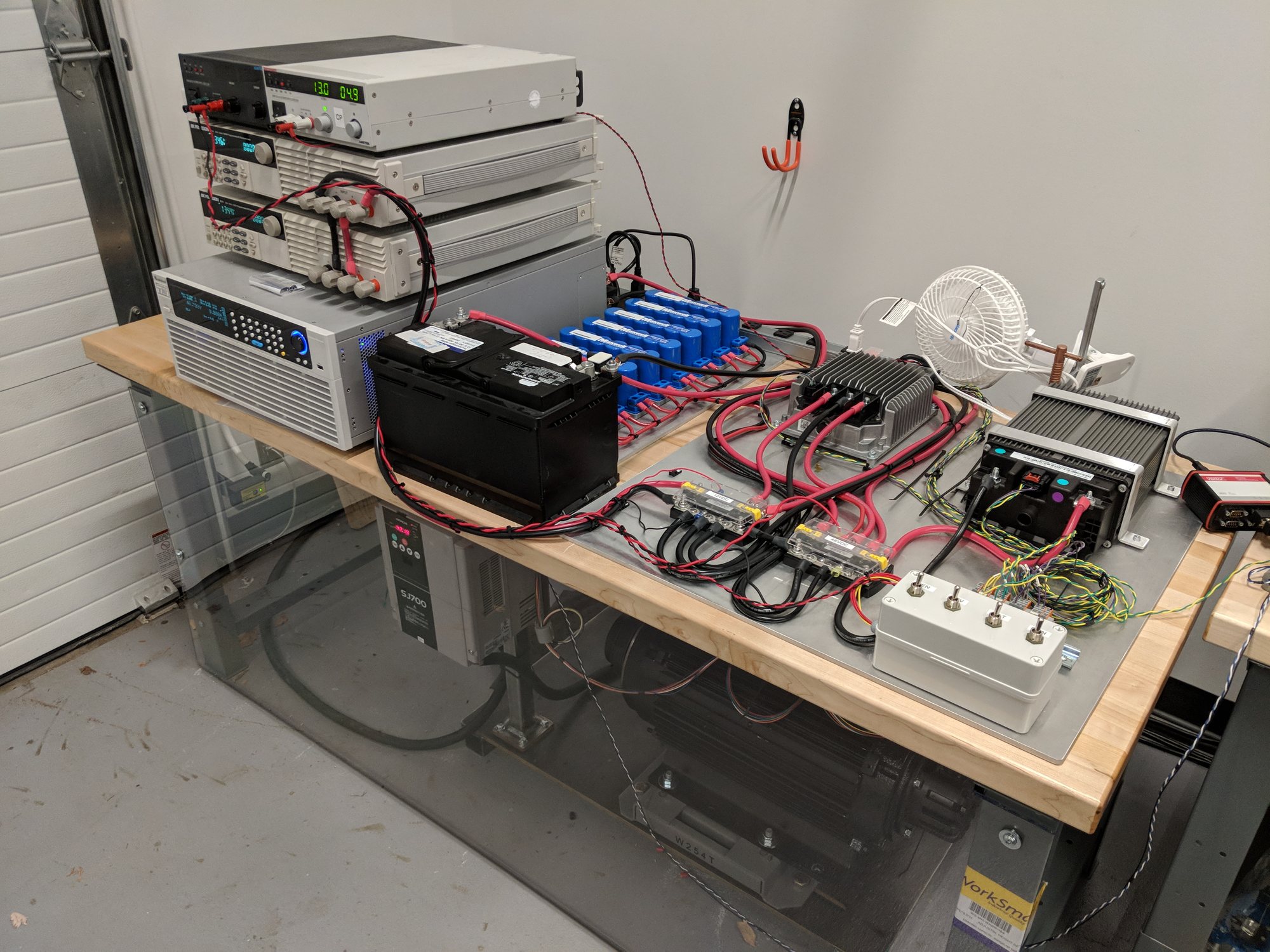
- Designed, built and installed sensor mounts and wire harnesses for GPS, lidar, radar and cameras, flexible enough to move or swap sensors easily; interfaced every sensor and synchronized data acquisition so we could start collecting data at scale.
- Wrote the low-level control software: lateral control from trajectory to steering angle at highway speed, longitudinal throttle and brake control, driver interfacing and takeover detection.
- Led the functional-safety analysis. We designed the system under ISO 26262 principles from the start, which also drove our verification and testing practice; I was hiring a team for SIL/HIL testing when I left.
Vehicle control architecture
- High-level stackLocalizationPerceptionPlanningtrajectory
- My scopeLow-level controllerLateral: trajectory → steering angle · Longitudinal: throttle & brake · Driver takeover detection
- Vehicle interfaceTruck CAN networksReverse-engineered with Vector CANalyzer
- ActuationSteeringThrottleBrake
Running the company
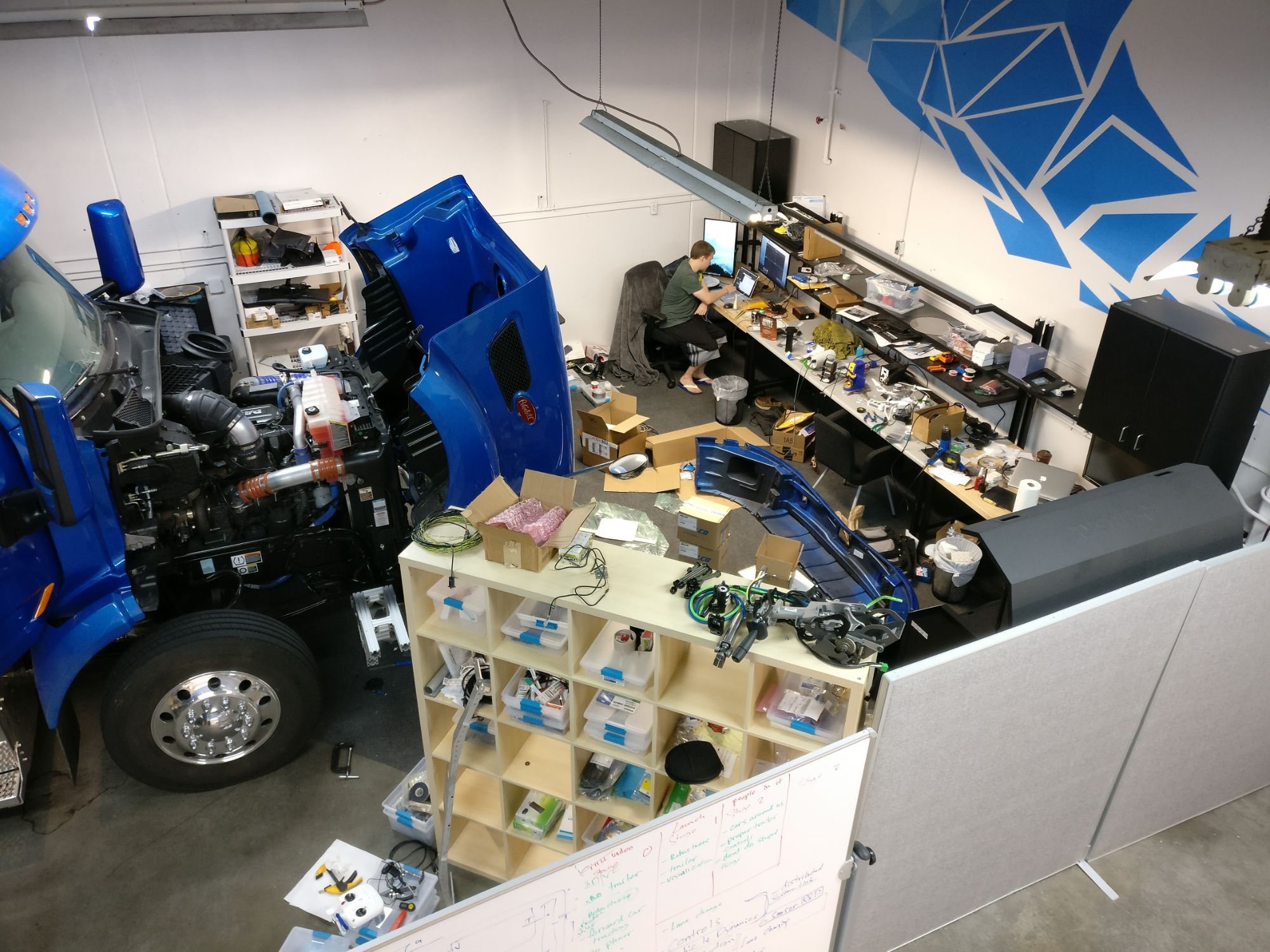
As President and COO I also hired, managed timelines, budgets and people, and shaped the culture. I left at the end of 2016, when we had grown to 10 people and finished testing our first system on private land, ready for public roads.